Although asphalt has dominated the road repair market for years, recent studies and changing market conditions now indicate the numerous benefits of concrete over blacktop.
With the U.S. highway system 50 years old in many places, the nation’s transportation infrastructure is in great need of improvements. According to The Road Information Program (TRIP), a national transportation research group, 33% of the nation’s major roads are in “poor or mediocre condition.” Repair solutions must be cost-efficient, easy to implement, and long lasting.
For years, asphalt has held the lion’s share of repair work. But today, pavements made of concrete prove to be more cost effective in the initial installment as well as more durable than asphalt, making them the ideal choice for repairing aging roadways.
Benefits over asphalt
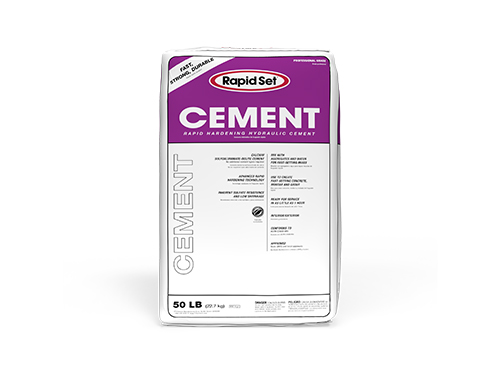
Recent studies and evaluations of Rapid Set, manufactured by CTS Cement, Cypress, Calif., have indicated its numerous benefits over asphalt. Rapid Set is a brand of fast-setting hydraulic cement products that gains structural strength in one hour, and has superior durability and low shrink-age. It is resistant to sulphate and ASR attack, and its 28-day typical strengths are achieved in six hours. Perhaps one of the most popular benefits is the speed that crews can install it. Cure times
of two hours or less minimizes the public’s inconvenience during road repairs and improves safety for project participants. Plus, the contractor can perform more work in less time with a quick-setting product. “The shortest time in which we’ve seen a crew replace the panel is 48 minutes—from production to the opening of lanes to traffic,” says Chris Ramseyer, P.E., Ph.D. Ramseyer, an assistant professor at the University of Oklahoma, has been involved with testing Rapid Set cement since 2005. “The average time is a little over an hour. No other product can come close to this in terms of turnaround time.”
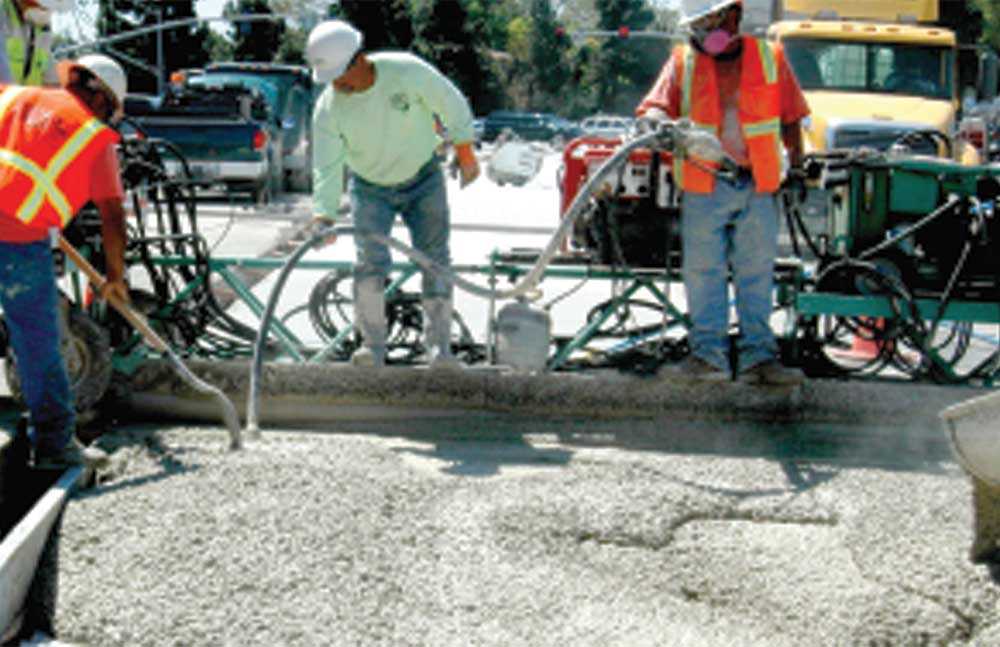
Ramseyer’s testing of Rapid Set in Tulsa from 1993 to 1994 indicates another component of turnaround time: crews working with the product can mobilize quicker than crews working with asphalt due to the small amount of equipment required and the efficiency at which it can be placed. “With Rapid Set all you need is a crew, a volumetric mixer, and a few simple tools. That’s not the case for asphalt,” says Ramseyer. The production of concrete on the jobsite rather than at the batch plant also improves work-ability and consistency, which further enhances the ease that crews place the material.
For a full-depth repair, only one lift is required, which helps to speed up the installment process.
On the other hand, in states such as California, asphalt replacement requires two lifts, meaning crews need more time to wait for the asphalt to cool to apply the additional lift and make the second compaction. Asphalt repair is more labor intensive and requires much more equipment.
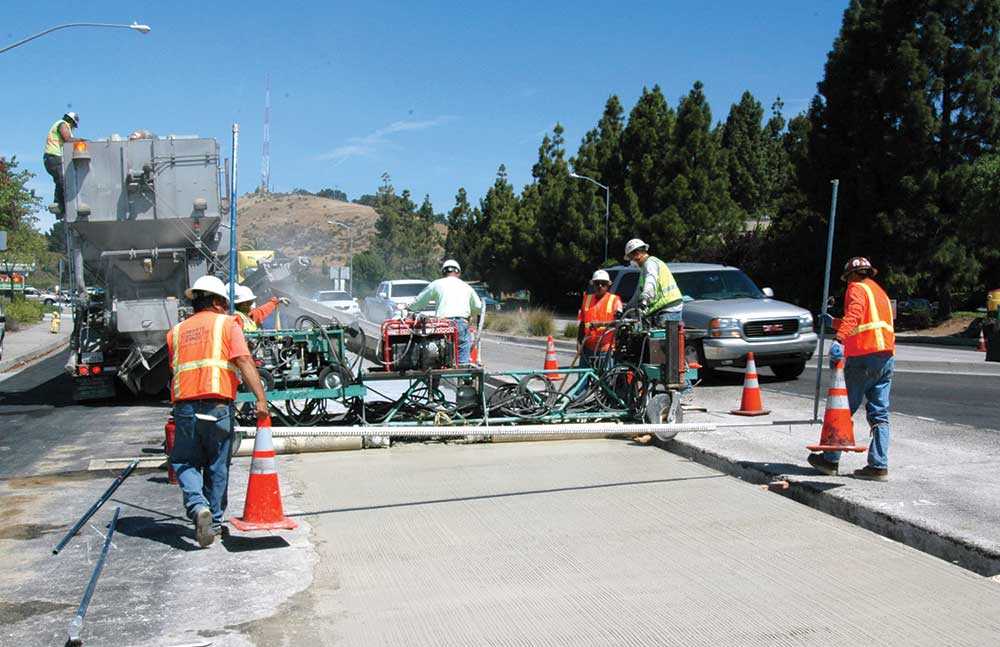
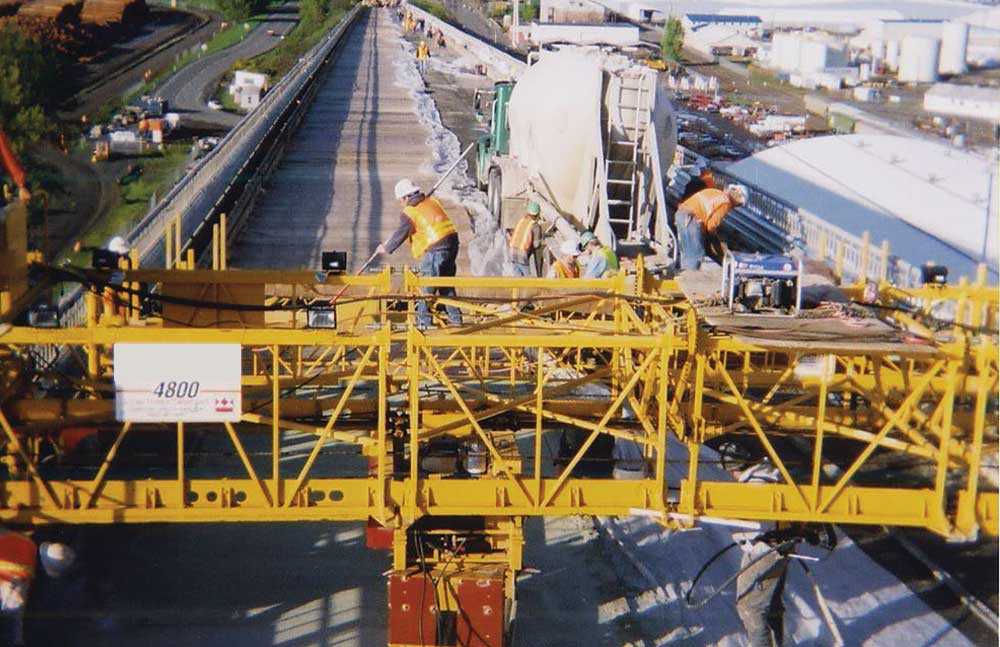
Panel replacement with Rapid Set concrete involves a more streamlined process. The volumetric mixer arrives at the jobsite and produces the concrete. A crew places the concrete in the panel location and then uses a power or roller screed to improve the surface and remove high spots. Regular finishing techniques are used, and then the crew moves on to the next panel. Crew sizes are smaller and also require less equipment. Plus it’s ready for traffic in two hours, where asphalt takes six.
If any problems with the sub-grade are detected, a quick repair makes for an easier solution.
“Asphalt is so dependent on the pavements that have performed for more than 40 years. On the other hand, most asphalt pavements last less than 20 years, and recent modifications to asphalt mixes due to formula modifications have shortened the product’s lifespan even more.
What’s more, the cement industry has reduced the amount of energy required to produce cement by 30% and is committed to a further reduction of up to 40% by the year 2020. Adding to concrete’s green appeal is the material’s recyclability and reusability. According to the ACPA, old concrete routinely is crushed and steel components removed and recycled, and then, the crushed concrete is used for roadbed materials, stormwater management, as aggregate in new concrete mixtures, and also for some nonpaving applications. Concrete is 100% recyclable and reusable.
A choice for all
As contractors look for ways to create a competitive advantage, Rapid Set proves to be a product that keeps paving costs to a mini-mum, and roads open in less time. “Rapid Set is not regionally sensitive. All states have the ability to use it,” Ramseyer says. “It’s easy to use, so anyone who can finish concrete can finish Rapid Set. Given the state of our infrastructure and the need to rapidly open roads and get traffic going, Rapid Set cement is a product the entire nation needs.”
CTS Cement Manufacturing Corp. is the leading manufacturer of advanced calcium sulfoaluminate (CSA) cement technology in the United States. Our Komponent® and Rapid Set® product lines are renowned for proven performance, high quality, and exceptional service life. Contact CTS Cement for support on your next project.
Call 1-800-929-3030
Original publication: Concrete Construction (Infrastructure 2009). Cement Products Offer Benefits Over Asphalt, 46-47.