Let’s dream for a moment,” says the TV commentator. “Let’s dream that Caltrans starts to work on this freeway right after the afternoon rush hour, and by the morning rush hour, not only is everything fixed, it’s all brand new pavement.”
TV newscasters don’t ordinarily dream about concrete, but recent construction achievements made possible by rapid-hardening-cement concrete (RHCC) are newsworthy enough to gain the attention of the media and the driving public.
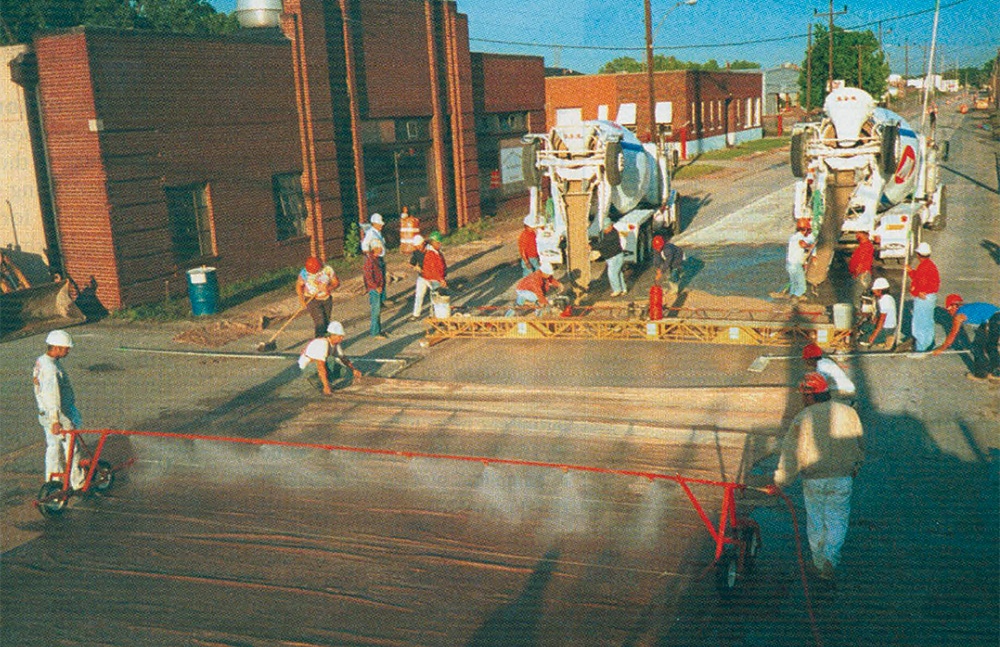
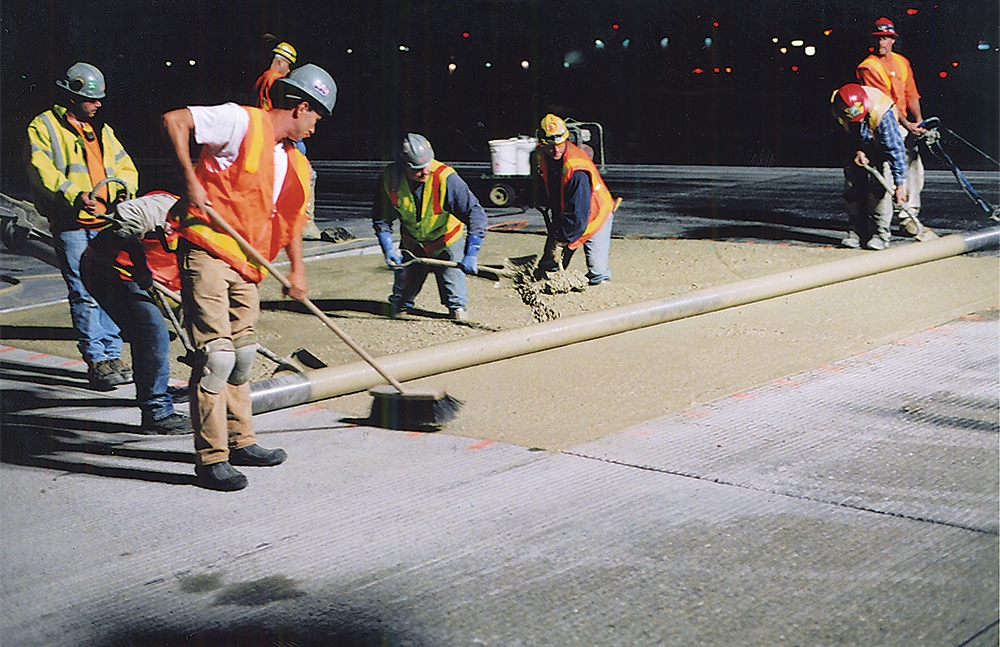
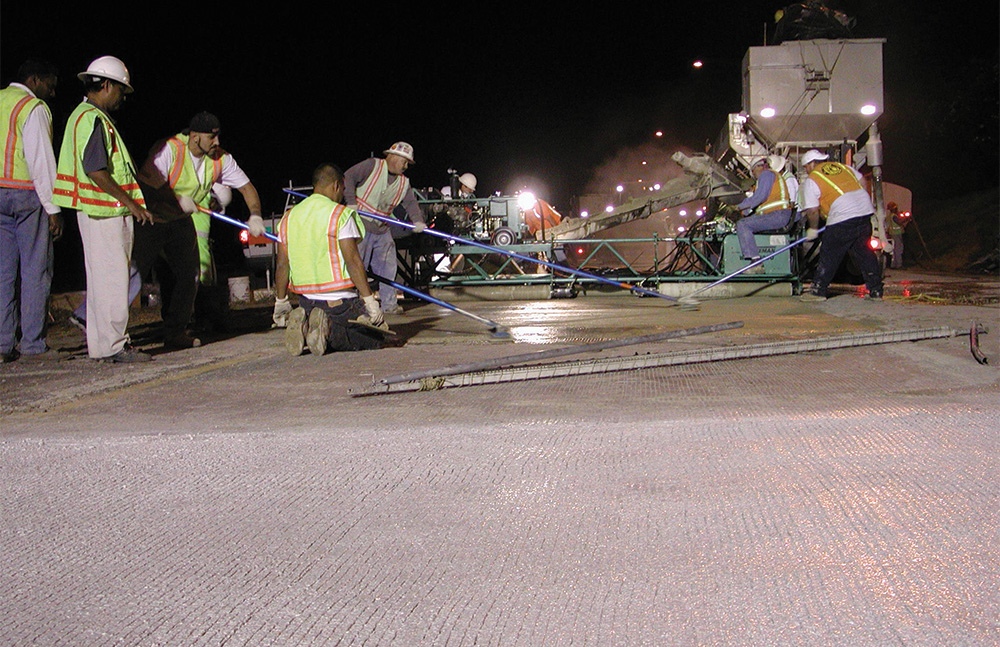
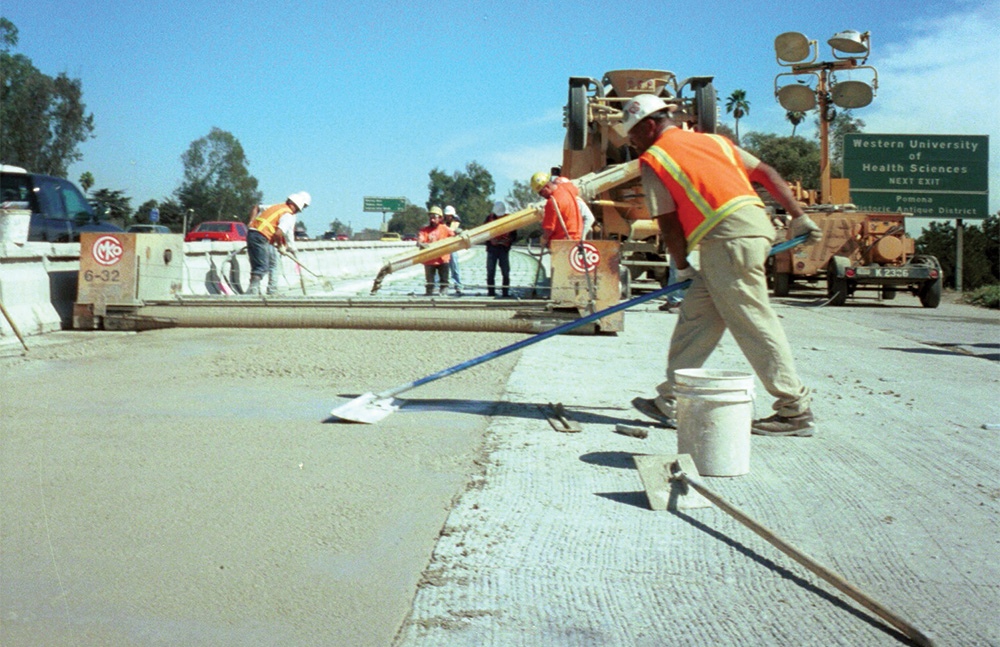
To minimize traffic interruptions, the half-mile stretch of California interchange featured on television was replaced at night in segments 24 feet wide and 9 inches thick. Crews placed about 500 cubic yards of RHCC in each shift, starting work at 10 p.m. so they could reopen the road to traffic by 6 a.m. the next morning, when the concrete’s flexural strength had reached 445 psi. In addition to this early strength development, which allowed traffic on the road in time for the morning rush, long service life – as much as twice that of ordinary portland cement concrete. Caltrans has used RHCC on other road rehabilitation projects as part of a Caltrans program to find better and faster ways to reconstruct California’s aging freeways.
What Is rapid-hardening cement?
The cement product that made the California interchange project possible is rapid-hardening cement. Like portland cement, rapid-hardening cement is hydraulic – that is, it sets and hardens by reacting chemically with water, and can harden underwater if necessary. Although similar to portland cement in many ways, rapid-hardening cement has a different chemistry, giving concrete significantly improved properties.
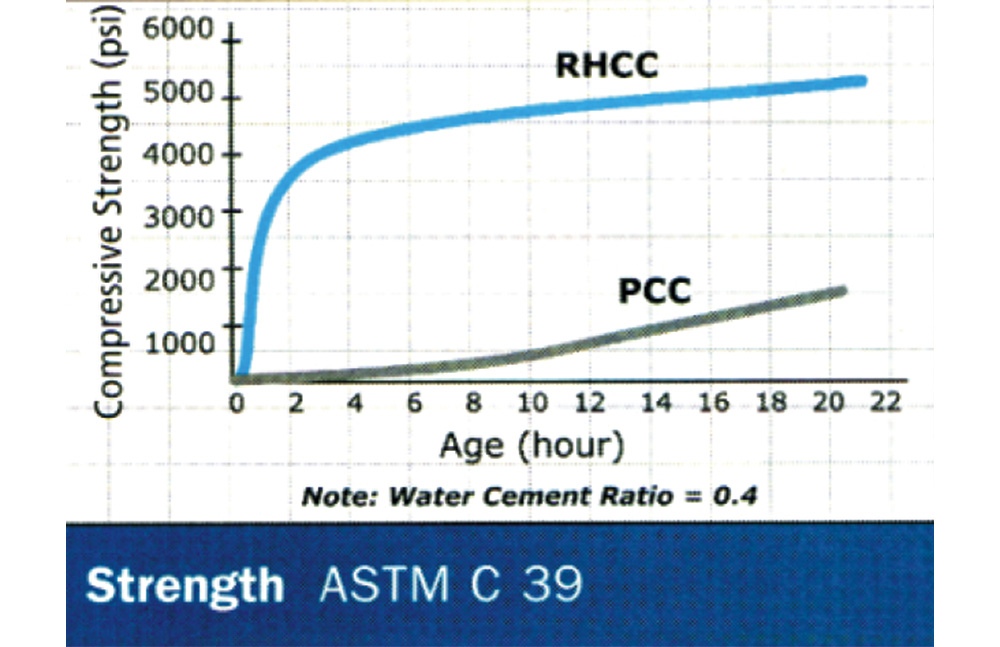
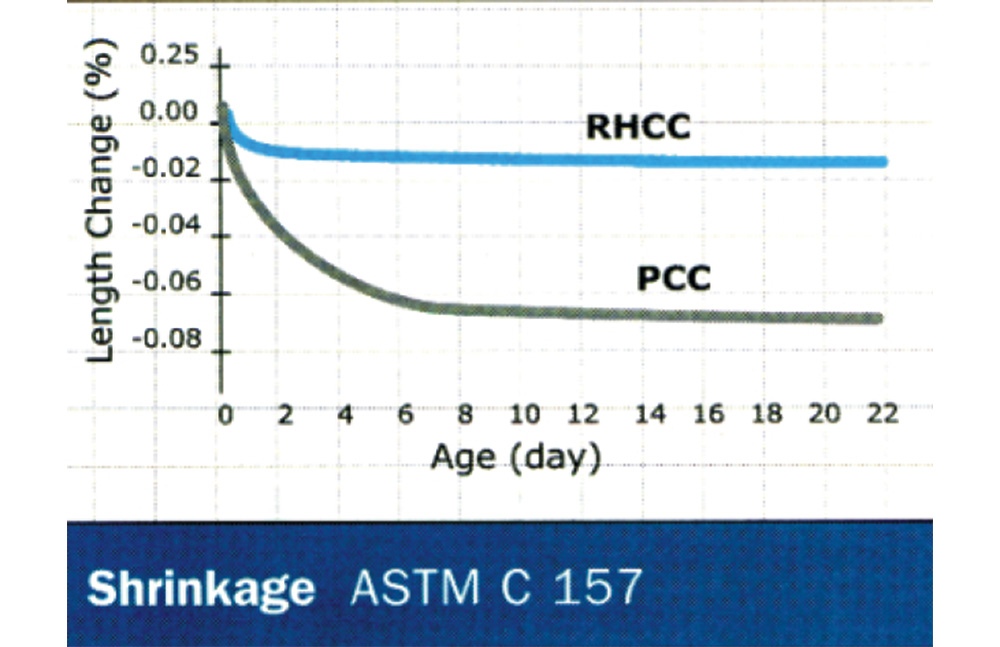
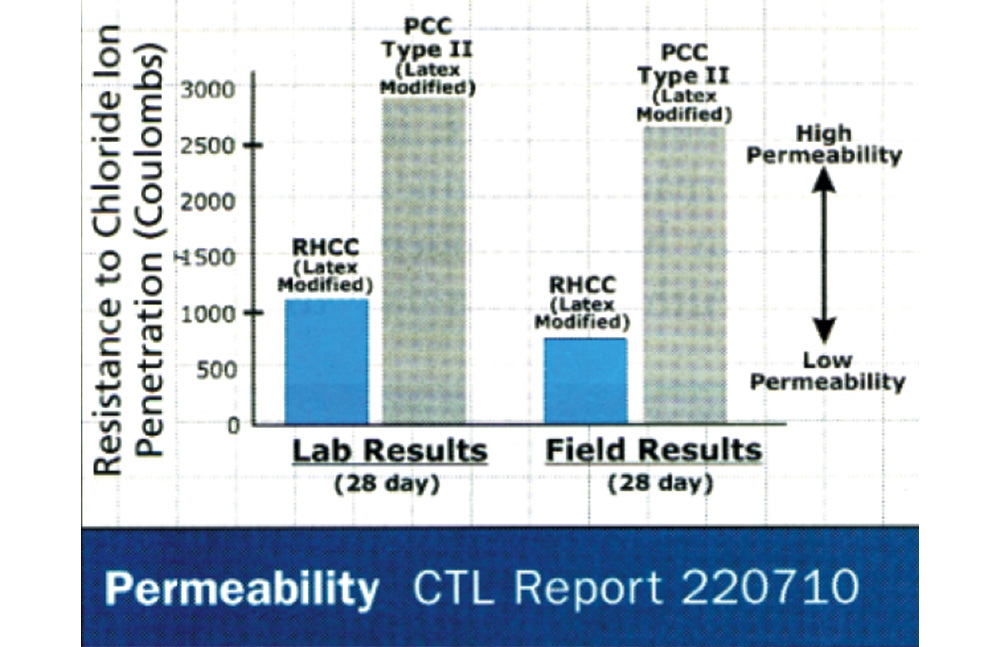
Commercially available RHCC with a 5-inch slump and 650 pounds of cement per cubic yard routinely achieves compressive strengths of 2500 to 3000 psi in 1 1/2 hours (Fig. 1). Its shrinkage is about 25% that of portland cement concrete (PCC) of the same slump (Fig. 2), and its porosity is much lower, contributing to improved durability. The chloride-ion penetration test (ASTM C 1202) is used to measure permeability, or porosity, with results expressed in coulombs, as shown in Figure 3. Typically latex-modified RHCC has a coulomb rating less than 1000, which is considered very low. In freeze thaw tests (ASTM C 666), RHCC can withstand 1000 freeze thaw cycles, compared with only 350 cycles for most PCCs.
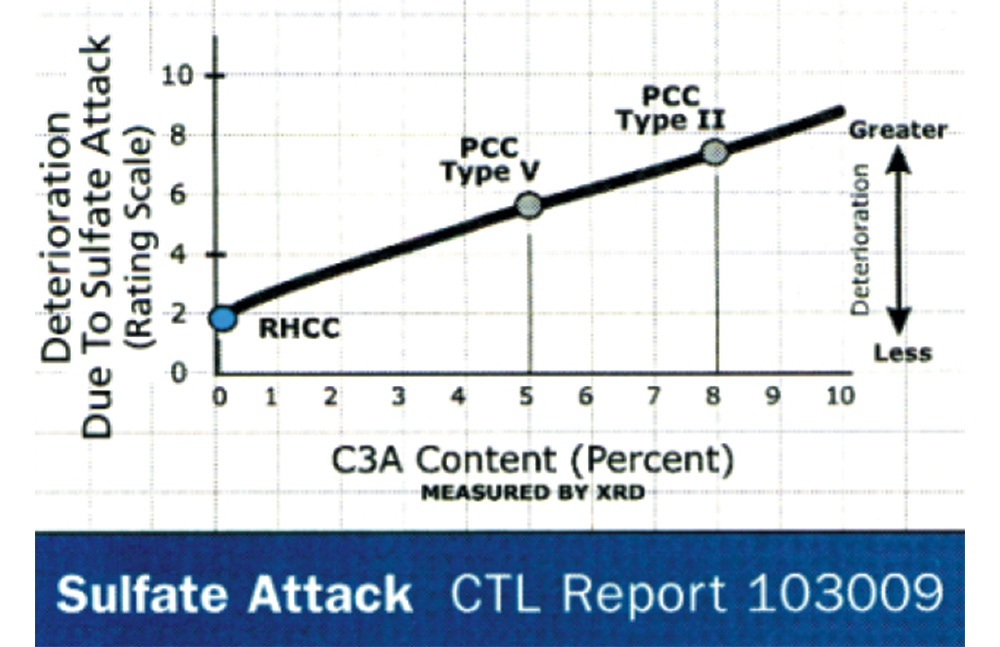
Chemically, rapid-hardening cement is about one-third calcium sulfoaluminate (C4A3S) and two-thirds dicalcium silicate (C2S). The generic chemical name for this relatively new cement is CSA (calcium sulfoaluminate) cement. It contains little if any tricalcium aluminate (C3A) or tricalcium silicate (C3S). Eliminating these two components improves sulfate resistance and durability. In fact, sulfate resistance is superior to that of Type V sulfate-resistant portland cement (Fig. 4).
Mix proportions
Mix proportions for RHCC are very similar to those for PCC. Generally, rapid-hardening cement can be substituted pound for pound for portland cement. Mixing and placing procedures for RHCC and PCC also are similar. Contractors generally place RHCC at a 4- to 6-inch slump and usually find that its color is lighter than PCC because of the low iron content of the cement.
A water-cement ratio of about 0.45 (or 45 pounds of water for every 100 pounds of cement) is needed to make most concrete fluid enough for efficient placement. In PCC, about 25 pounds of this water is required to hydrate the cement, and the 20 pounds of excess water gradually leaves the concrete, resulting in shrinkage and voids. In contrast, because of its calcium sulfo-aluminate content, RHCC requires almost all of the 45 pounds of water for hydration, leaving little excess water that would lead to shrinkage or voids. This is a major factor in the enhanced durability attainable with RHCC, but it also results in different practices for finishing and curing.
Finishing and curing procedures
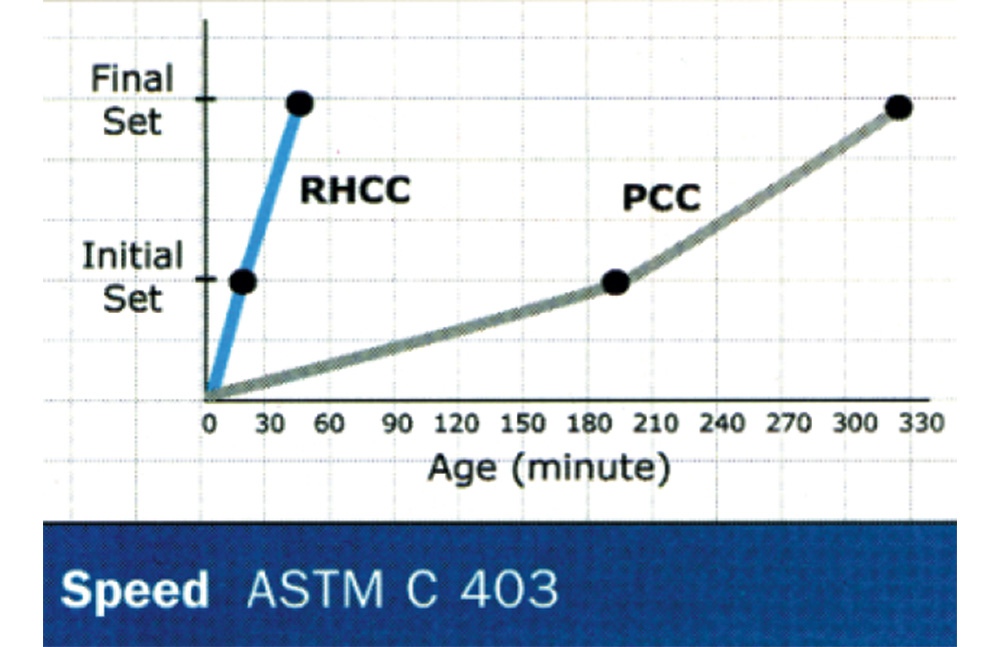
Unmodified, RHCC has an initial setting time of about 15 minutes at 70° F, as measured by ASTM C 403 (Fig. 5), the same test method used for PCC. Cooler temperatures extend the setting time, and warmer temperatures shorten it. Since unretarded RHCC reaches initial set in as little as 15 minutes, contractors must sample, place, and finish the concrete without delay. By using citric-acid-based retarders, contractors can extend the setting time for several hours to allow adequate time for transporting concrete and for placing and finishing operations. Superplasticizers work with RHCC in much the same way they do with PCC.
Because RHCC uses almost all of the mix water for hydration, there is little if any bleed water. Thus troweling to close up the surface is not required. Often the desired surface finish can be achieved with a vibrating screed, followed by brooming or tining. To achieve a smooth steel-trowel finish, finishers can use conventional steel troweling but will find that the work goes much faster because the final set of RHCC is significantly earlier.
RHCC needs wet curing; usually a water spray applied to the surface for 1 to 2 hours after finishing is adequate. The surface should be kept wet enough to maintain a sheen. Where water curing is impractical, contractors can use a membrane-type curing compound.
Plastic shrinkage cracking, caused by rapid evaporation of water from the concrete surface before final finishing and the start of curing, is a potential problem with RHCC, just as it is with PCC. So the same precautions must be taken to protect RHCC from high temperatures and dry winds-the principal causes of plastic shrinkage cracking.
Manufacturing and distribution
Rapid-hardening cement has been in use for more than 15 years. It is made in a modified portland cement kiln, using proprietary manufacturing techniques. Not only is the raw material mix fed into the kiln chemically different from materials used in making portland cement, the burning process also is different, and the clinker is ground finer than portland cement.
Although at one time there were several manufacturers of rapid-hardening hydraulic cement in North America, currently the only producer is CTS Cement Manufacturing Co., Cypress, Calif. (CTScement.com). Thus the information presented here is based on the performance of the CTS product, named Rapid Set Cement.
North American production comes from two plants, (formerly at) one in Kansas and the other in Juarez, Mexico, not far from El Paso, Texas. The cement is distributed to terminals and packaging plants throughout the United States and sold in bulk for use in mobile mixers and by ready-mix plants. CTS also sells the cement in bags and as a component of packaged grout, mortar, concrete, and plaster mixes. These packaged products are sold by construction-material supply outlets throughout the United States.
Who's using RHCC?
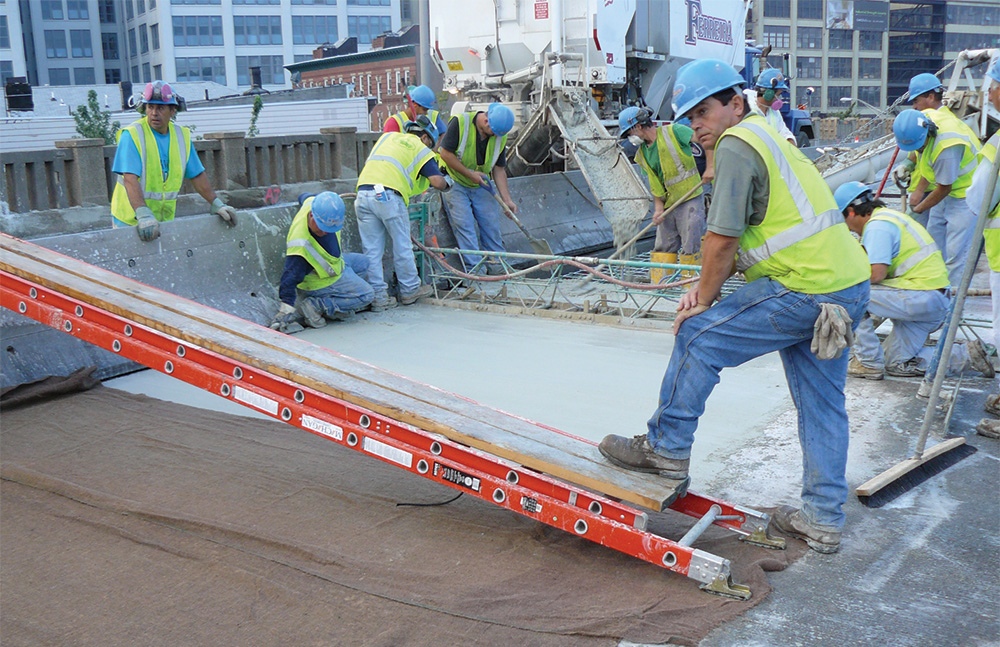
Rapid-hardening cement concrete can be used anywhere portland cement concrete can be used, but it offers the greatest advantages when used for repair or rehabilitation of highway and airport pavements, bridge decks and overlays, and other projects where time is of the essence. It enables concrete contractors to take on pavement rehabilitation jobs that otherwise might be done in asphalt because of the need to return the pavement to service quickly. With rapid-hardening cement, concrete pavements can be returned to service as fast as or even faster than asphalt pavements. – And RHCC has a much longer service life than asphalt.
Rapid-hardening cement costs three to four times as much as portland cement, but transportation departments often find that the faster completion times outweigh this extra cost because they save money on traffic-control measures and minimize public complaints caused by road and runway closures. As use of the cement increases and production expands, the manufacturer predicts that the cost of rapid hardening cement will decline.
Technical assistance
An ASTM technical committee is now at work on a standard specification for rapid-hardening hydraulic cement. Until such a standard specification is completed, some users will have to rely primarily on technical data supplied by CTS. Other organizations, such as transportation departments in California, New York, New Jersey, and Connecticut, have developed their own specifications.
CTS has experienced personnel to supply hands-on assistance in both the field and laboratory, allowing users of RHCC to become familiar with appropriate testing, mixing, placing, and curing practices. These company representatives typically are skilled enough in construction to take a trowel in hand and work alongside the contractor’s crew to demonstrate proper finishing techniques.

Written by M.K. Hurd, an engineer and writer specializing in concrete building methods. She is a former editor of Concrete Construction and author of Formwork for Concrete, published by the American Concrete Institute.
CTS Cement Manufacturing Corp. is the leading manufacturer of advanced calcium sulfoaluminate (CSA) cement technology in the United States. Our Komponent® and Rapid Set® product lines are renowned for proven performance, high quality, and exceptional service life. Contact CTS Cement for support on your next project.
Call 800-929-3030.
Original publication: M.K. Hurd. (2000, October). Rapid Set Quick Fix. Concrete Construction, 45-48.