Once synonymous with basic utilitarian structures, tilt-up concrete is now seen as an economical and attractive choice for high-profile projects such as offices, schools, and commercial buildings. As tilt-up becomes ‘respectable,’ it needs to dress for success – old expectations for concrete finishes are no longer sufficient for the building market. Fortunately, new concrete finishing compounds have been developed to make it possible to specify and obtain a smooth, high-quality finish without the challenges and limitations of traditional ‘sacking and patching’ techniques.
Surface defects plague most types of concrete work. The Tilt-Up Concrete Association’s (TCA’s) guide specifications limit the acceptability of defects based on the distance at which the building will be seen by the public. Its most exacting standard, Grade A (i.e. architectural) is intended for projects designed for the circulation of people within 3 to 7.6 m (10 to 25 ft). Paragraph 3.7 B.1. of the 2002 specifications states:
All panel surfaces will be free of all voids, holes, pockets and other surface deformations greater than [3.4 mm] 1/8 in. Surfaces of panels must not project reinforcing patterns, floor joints, or other projections or voids from the casting surface.
As strict as this standard is, recent experience with high-end tilt-up structures indicates many designers and building owners want exterior walls to be as smooth and uniform as interior finishes (while still providing strength and durability). Fortunately, new patching compounds make this both practical and economical.
Piece of Cake for a Coffee Warehouse
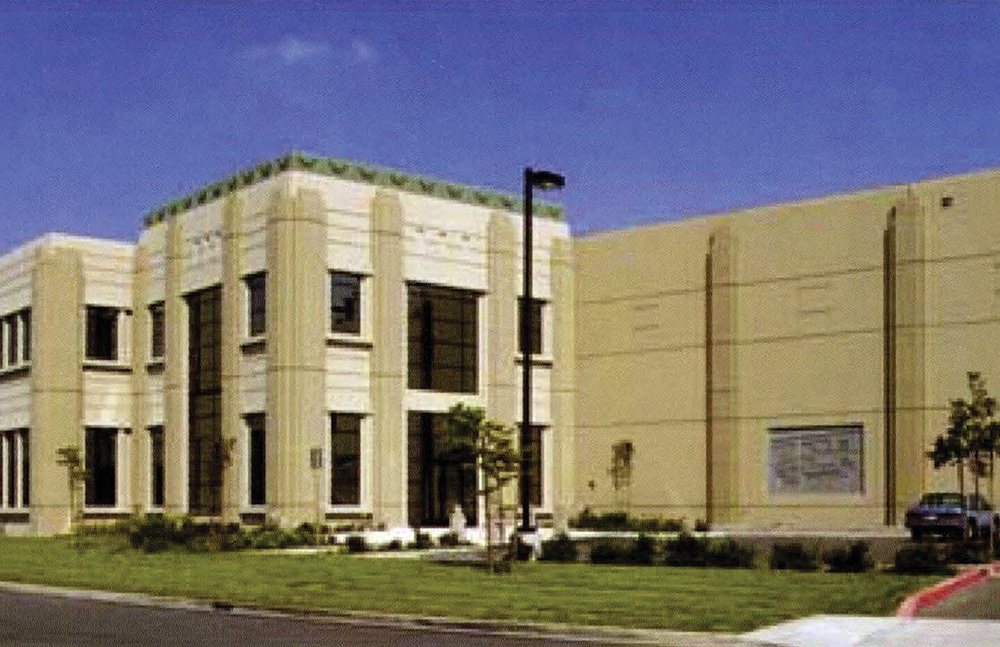
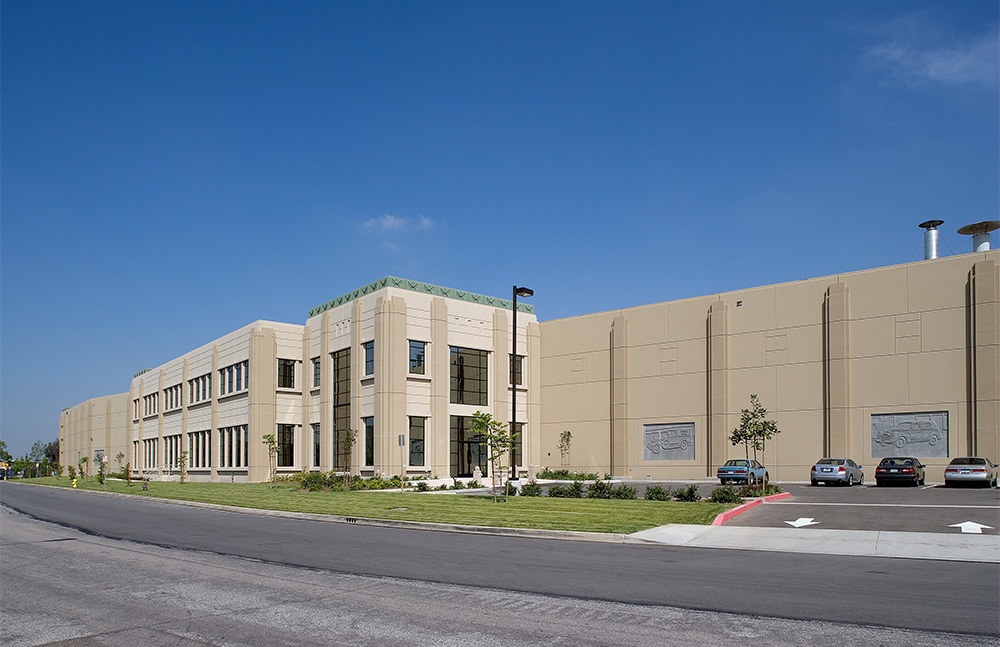
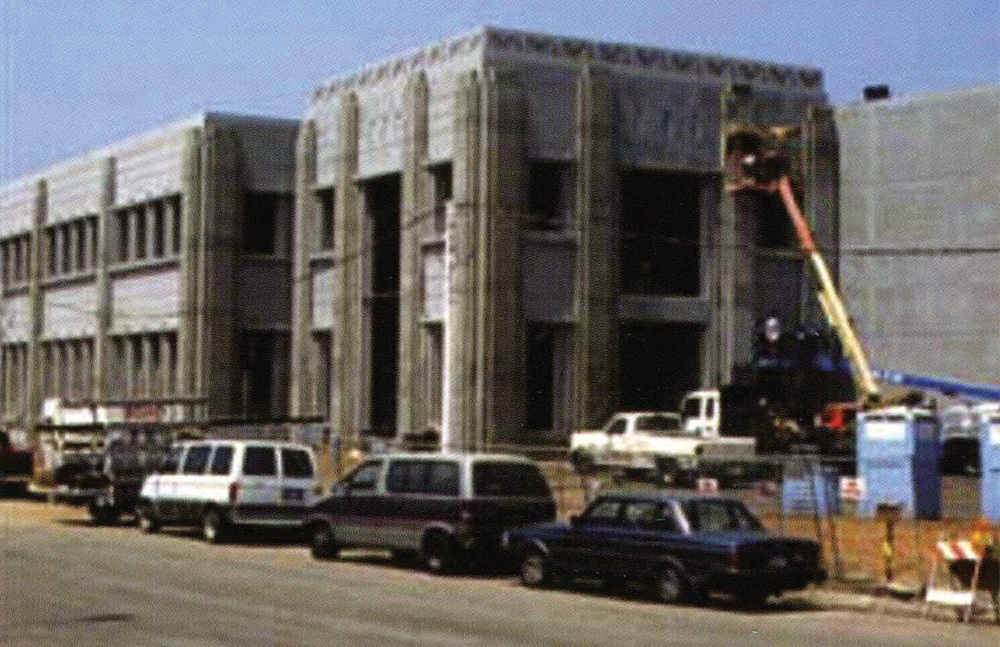
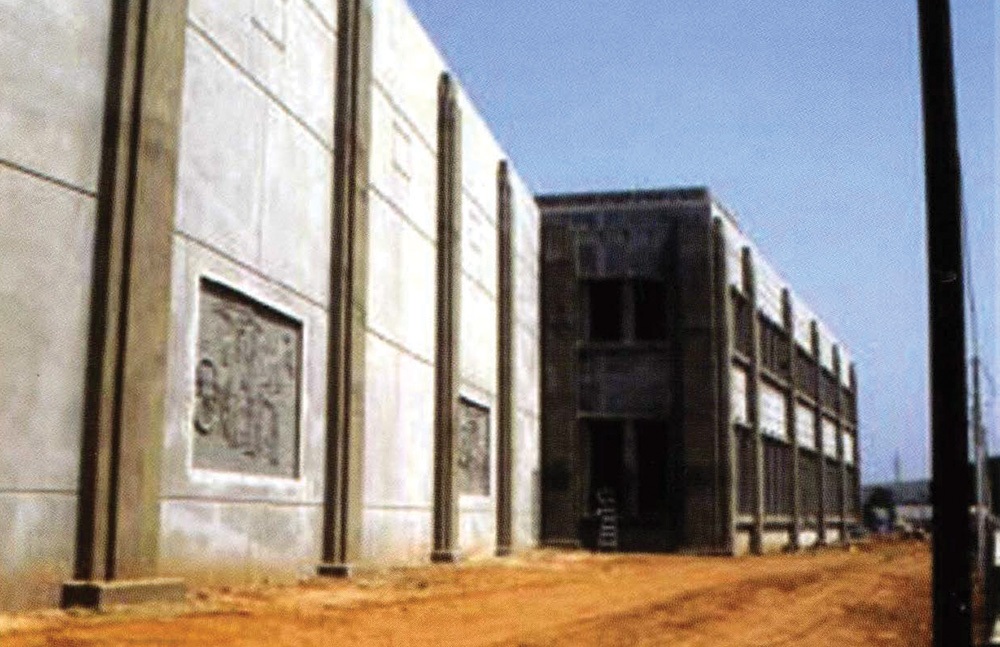
The Apffels Coffee Warehouse (Santa Fe Springs, California) is a recent project meeting high standards for tilt-up performance and aesthetics. The Apffels building won a 2006 TCA Achievement Award for “set[ting] new standards and advanc[ing] the industry” by abandoning traditional sacking and patching methods for a patching compound.
Apffels’ new facility includes a two-story corporate office and a large, 12.2-m (40-ft) tall high-bay structure for coffee roasting, packaging, and warehouse space. The nearly century old company is in its fourth generation of family management. Since corporate heritage is an important marketing point, the company wanted the new building to reflect its history. Thus, the structure invokes an art deco feel and incorporates a wealth of details that bespeaks the client’s pride.
“They didn’t just want a simple tilt-up building” explains architect Bruce Gillings of GGM Architects (Aliso Viejo, California). “They wanted a level of detail that would show a concern for detail in their products.”
This detail included a variety of recesses and reveals cast into the concrete panels to reference classic masonry architecture. The building’s main façade is highlighted by a series of bas-relief sculptures integrally cast into the tilt-up panels that depict the company’s historical roots. According to Ken Jackson (of Los Angeles-based general contractor Dynamic Builders), the artwork was “designed to take Apffels’ valued history and bring it with them” into their new home. The reliefs were textured with a fine sandblast finish, and the surrounding walls specified with a “smooth finish’’ to offset the artwork.
Since Apffels needed to vacate its previous facility, the 8400-m2 (90,418-sf) building had a construction schedule of just 300 days. Creating a smooth surface over the vast exterior on a tight schedule presented a major challenge. It was entrusted to JDC Inc., a sacking contractor with 35 years of experience and a reputation for quality workmanship.
From the Floor to the Wall
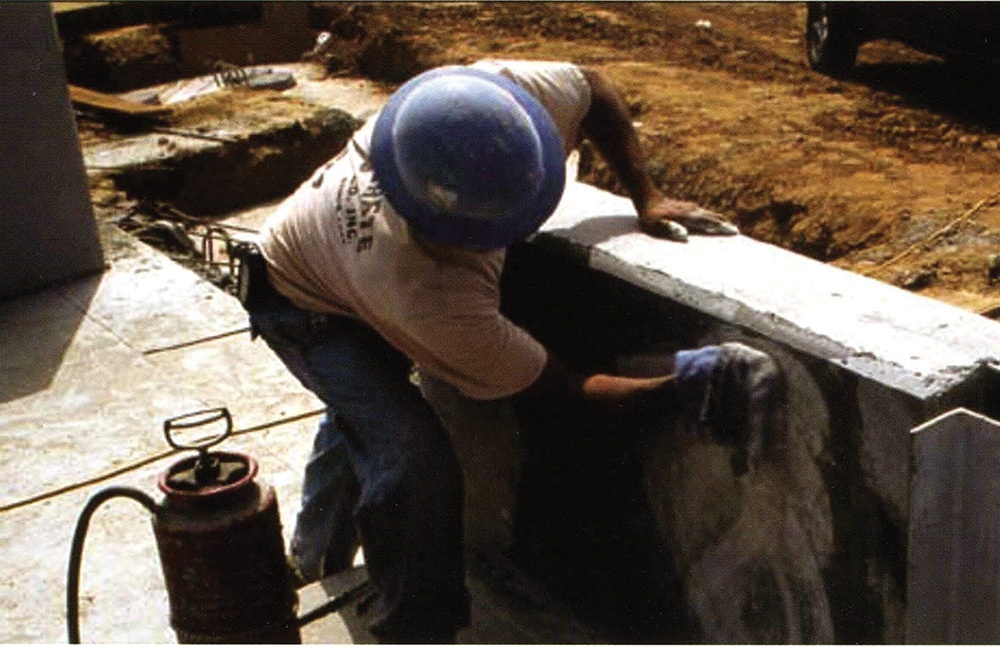
Ron Drennan, JDC field operations manager during the Apffels project, says finishing tilt-up walls is complicated by the simplicity of the tilt-up process, since the concrete floor of the job-site becomes the casting bed for the wall panels.
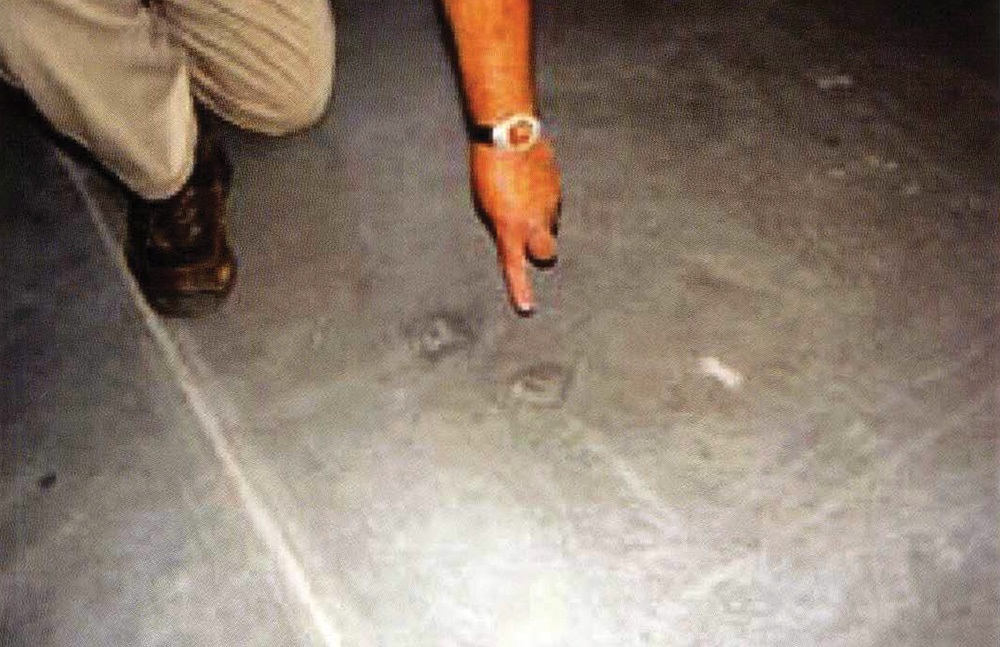
“When they raise the building, any defect on the floor will show on the outside of the building,’ he explains.
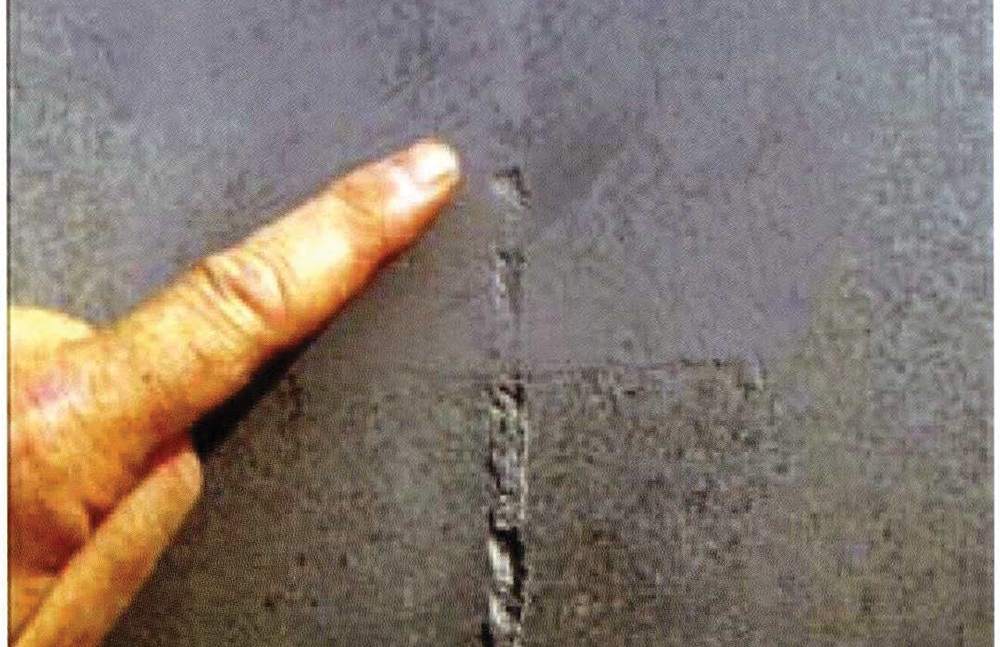
For example, floor control joints translate into ridges or fins on the face of wall panels. Even if the contractor puts a filler into the floor joints, their location will still be visible on the wall due to differences in texture between the material and the hard-troweled concrete.
Additional wall defects are caused by fasteners and sealants used to secure form boards to the casting slab and resist wet concrete leakage. While the sealants are scraped off the floor and fastener holes in the floor slab are patched, they still leave their mark on subsequent wall panels cast on affected sections of the building slab.
“We have to grind away the defects that transfer onto the face of the tilt-up panels and then try to patch the wall so the repair matches the rest of the surface;’ explains Drennan.
Combine these with the ‘bug-holes’ concrete flow-lines, and other blemishes, and a building the size of Apffels’ has a lot of wall area to be smoothed.
The Old Way
Sacking and patching, the traditional method for repamng concrete surface defects, is often a grueling, intensive process left over from an age when labor was relatively cheap, and environmental and health hazards were not paramount concerns. It is called ‘sacking’ because it involves applying wet cement slurry to the wall and then rubbing it with a burlap gunny sack loaded with a dry mixture of silica sand and portland cement. Essentially, the sand is being crushed against the wall to make it flat. This is brute-force operation-slow, extremely tiring, and very dirty. Streaking is a constant problem, and the result is not always a truly smooth surface.
Another drawback lies in the lack of uniformity in the sacking industry. It has been common practice to specify simply a “smooth” finish or use equally imprecise terms (e.g. “rubbed”), but the actual appearance was variable, depending on the methods and consistency of the finishers.
“Every sacking contractor had his own method. One might use #30 silica sand, while another might use #60 silica sand;’ Drennan says. “You could have five different sackers on a job and each one would have his own technique:’
The result depended on the exacting eye (or lack thereof) of the superintendent on the job.
As tilt-up’s status rose, sacking contractors were under pressure to find better methods. Some began retouching concrete with interior joint compound, known as ‘drywall mud; which could be finished more quickly and smoothly.
However, this product proved unsuitable for exterior surfaces because it swells when exposed to moisture and can pop off. Drennan recalls attempts to use epoxy patching compounds also failed.
“If we used a liquid epoxy, everything would run on us;’ he explains. “If we used paste epoxy, we would have to grind it and we would have swirl marks from the grinding stone.”
A Smooth Move
In 2001, Drennan became involved in field trials of a new type of proprietary concrete patching compound. The first in a new generation of proprietary fast-setting, one-component patching materials, this product was cleaner, more workable, and far smoother than traditional sacking methods. It allowed the potential for sharper corners and less waste, while also sanding more easily.
Sold as dry powders, the products are mixed with water prior to use and then trowel-applied to clean, dry concrete. The compound’s normal compressive strength of 10,300 kPa (1500 psi) can be increased to 13,800 kPa (2000 psi) by reducing mix water by 25 percent.
Unlike portland cement-based patching compounds that can take weeks to cure, these products are based on rapid-setting hydraulic cement that cures very quickly and has a low pH, so it can be painted the same day. It is blended with polymers and ultra-fine calcium carbonate aggregate that can fill depressions up to 12.7-mm (0.5-in.) deep in one pass, yet still be featheredged to seamlessly transition into the surrounding surfaces. When necessary, the material can be sanded with 80-100 grit sandpaper for further smoothness.
Although the Apffel’s building is coated in tan-colored paint, the patching compound can also be used as an exposed, overall finish in its native off white color-akin to a plaster skim coat that Drennan sees as “polished marble” in appearance. (In its award write-up, TCA describes the finish on the wall panels as a “smooth, glassy look.”) While initially developed for tilt-up, the patching compound can also be used on precast and for cast-in-place concrete.
Finish Future
Drennan believes these one-component patching materials could represent a paradigm shift in tilt-up construction – a small revolution enabling builders (and their clients) to attain precisely the intended finish without compromises or costly rework.
“Owners and architects are starting to specify this product because each applicator on the job can get consistent results” he says. “At the same time, painters get a smooth substrate and don’t have to worry about repainting because of sacking falling off.”
The new method changes the economics of concrete finishing. It shifts more cost onto materials, but affords saving in labor and accelerates the construction schedule. Drennan sees this shift as a psychological hurdle that must be overcome to gain acceptance from developers and general contractors.
“We get as much productivity out of a 50-pound bag of this type of product as we would out of 300 pounds of sand.The Construction Specifier December 2006 cement,” he explains. “When a sacker’s out there throwing the sand and cement against a wall, a lot of it is falling on the ground or blowing in the wind. In the long run, it’s basically pretty close to the same cost.”
This airborne dust can take a toll not only on laborers, but also on site equipment, with sand and cement getting into the controls. Further, the silica sand used in sacking has also been implicated as a health risk.1
One of the most important impacts of these new compounds may be their ability to produce a reliable, specifiable finish quality that could not be achieved with the traditional method. If using the TCA Guide Specification, for example, Part Two-Products should be amended to name acceptable patching compounds or require “patching compounds specifically manufactured for concrete surface:’ Finish tolerances in Part Three-Execution should establish criteria satisfying the project’s aesthetic vision; if necessary, Part One-General can be used to specify a mock-up so proposed levels of workmanship can be established.
ADDITIONAL INFORMATION
Author: Matt Sambol works with CTS Cement Manufacturing Corp., where he is the product development engineer for Rapid Set WunderFixx, a one-compound patching material. He can be contacted via e-mail at msambol@CTScement.com. Michael Chusid, RA, FCSI, is principla of Chusid Associates, an architectual materials and technology consulting firm. He is on the American Concrete Institute’s (ACI’s) Committee 124 (Concrete Aesthetics) and is a frequent contributor to The Construction Specifier. He can be reached at www.chusid.com.
Abstract: A new technique for improving concrete surfaces simplifies the aesthetics of concrete construction. Where it used to be necessary to grind, patch, and sack concrete to repair construction defects and get smooth surfaces, a new product yields better results with less effort. The new patching compound is especially useful in tilt-up concrete to mitigate visual defects formed by the casting slab.
Notes
(1)See “Silica Dust Exposures During Selected Construction Activities” by M.E. Flanagan in the American Industrial Hygiene Association’s AIHA Journal (64, 2003).
CTS Cement Manufacturing Corp. is the leading manufacturer of advanced calcium sulfoaluminate (CSA) cement technology in the United States. Our Komponent® and Rapid Set® product lines are renowned for proven performance, high quality, and exceptional service life. Contact CTS Cement for support on your next project.
Call 1-800-929-3030
Original publication: Sambol, M. (2006, December). Giving the Sack to Sack & Patching. Construction Specifier, 2-6.