Introduction
Along Florida’s Indian River Lagoon, shoreline restoration is about more than stopping erosion. It is about creating a stable habitat, reducing wave energy, supporting oyster recruitment, and protecting native vegetation. For Marine Discovery Center (MDC) in New Smyrna Beach, Rapid Set® Cement All® became part of a practical, volunteer-friendly solution for producing durable oyster-shell habitat units at scale.
From Plastic-Based Materials to Biodegradable Shoreline Restoration
Marine Discovery Center has a long history of experimenting with non-plastic materials and completely moved away from plastic-based restoration materials in 2020 after researching the impact of microplastics in the Indian River Lagoon. The organization’s goal was to use materials that better aligned with the surrounding ecosystem while still performing in demanding shoreline conditions.
That shift led MDC to develop cement-based “wavebreak” or “breakwater” units designed to reduce the energy of boat wake and storm-driven water before it reaches the shoreline. In living shoreline work, this matters because excess wave energy can erode banks, disturb new plantings, and reduce the stability needed for habitat recovery.
Living shorelines use natural materials, native vegetation, oyster reefs, mangroves, and other habitat-supporting elements to help stabilize coastal areas. Instead of relying only on hard structures, the approach is designed to work with natural systems while helping protect shorelines from erosion.
Why Oyster Shells are Important to the Indian River Lagoon
Marine Discovery Center also operates the Shuck & Share Oyster Recycling Program, which began in 2014 to divert oyster shells from local restaurants and reuse them in habitat restoration. That shell is valuable because oyster larvae, called spat, need a stable place to settle during a short window of roughly two to three weeks.
Oyster shells provide both a physical surface and a chemical cue that encourages larvae to settle near other oysters. In restoration terms, that makes recycled shell more than a waste-diversion material. It becomes a building block for future reef growth.
MDC combined this shell resource with a restoration material concept known as POSH, or Pervious Oyster Shell Habitat. The organization customized the process and materials for local shoreline stabilization and oyster reef protection projects, using Cement All as the binder for the oyster shell units.
Building POSH Units for Wave Energy, Habitat, and Scale
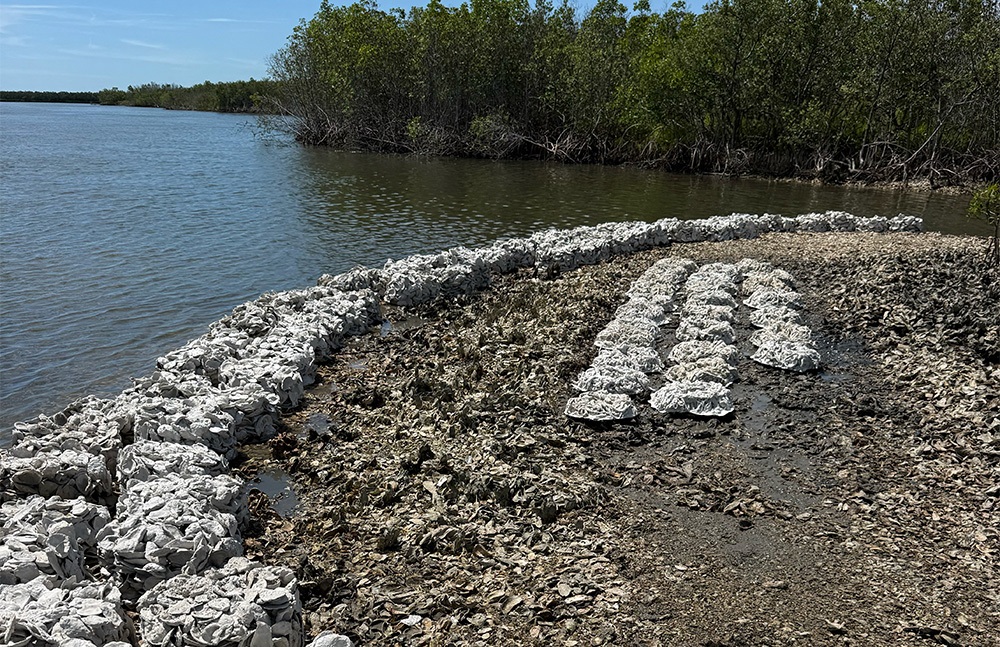
The POSH units combine recycled oyster shells and Cement All into transportable structures that serve two purposes: they help break up wave energy, and they provide settlement habitat for oysters and other marine life.
In the field, these units are placed where they can help reduce boat-wake and storm energy before it reaches vulnerable shoreline areas. They also help protect newly planted mangroves and native grasses on the landward side. Over time, success can be measured in several ways, including oyster settlement, biodiversity, sediment accretion, vegetation growth, and shoreline stability.
MDC first deployed 75 Cement All POSH units in 2024 in waters adjacent to its property and at Canaveral National Seashore, where the units helped protect biodegradable oyster mat reefs. Since then, the program has expanded significantly. MDC has created and deployed approximately 1,700 to 1,800 units for shoreline stabilization and oyster reef buffer projects, using about 600 bags of Cement All. Each unit uses roughly one-third of a bag and weighs about 60 pounds.
Why Fast Setting Matters in Volunteer-Led Restoration
For project managers, one of the biggest takeaways from this project is the role of production efficiency. Restoration work can depend on volunteers, workshops, limited staging space, and repeatable processes. Materials must be easy enough to use in a group setting but durable enough to perform after deployment.
Cement All helped MDC support volunteer-led production because the material begins setting quickly, allowing units to be demolded, moved, and stacked during workshops. That speed is important when teams need to produce a high volume of consistent units without leaving forms tied up for extended periods.
The project also highlights the importance of choosing a cementitious material that supports both handling and placement. The units need to bind recycled oyster shells into a transportable form, remain intact after deployment, and provide a surface where oyster recruitment can occur.
Lessons for Jobsite and Restoration Applications
This project is not a typical concrete repair application, but it offers useful lessons for individuals working in marine, shoreline, or habitat-sensitive environments.
First, material selection should be tied to both performance and project workflow. A product may need to meet handling, demolding, staging, and transport requirements before it ever reaches the final installation site.
Second, field conditions matter. Shoreline projects must account for water exposure, wave energy, substrate stability, installation access, and long-term durability.
Third, environmental language should be used carefully. The project team noted that Cement All’s pH level was one reason they viewed it as more suitable for this application than portland cement-based alternatives, but they also clarified that there is no official scientific certification behind a “marine-safe” designation. For professional audiences, that distinction matters. Product selection should be based on documented properties, project testing, field performance, and the requirements of the specific application.
Product Spotlight: Rapid Set Cement All
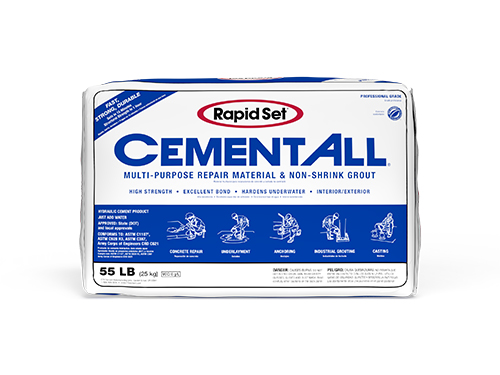
Rapid Set Cement All is a high-performance, fast-setting, multi-purpose repair material. It sets in 15 minutes, reaches structural strength in one hour, and is durable in wet environments. It can be applied from featheredge to 4 inches thick, depending on the application.
For the Marine Discovery Center project, Cement All was used in a specialized habitat-restoration application rather than a standard repair. Its fast-setting characteristics helped support workshop production, while its cementitious properties helped bind recycled oyster shells into durable, transportable POSH units. As with any non-standard use, project teams should evaluate the application, do a mockup, and confirm performance expectations before scaling production.
Conclusion
Marine Discovery Center’s POSH unit program shows how practical material decisions can support both production efficiency and restoration goals. By combining recycled oyster shells with Cement All, MDC created a repeatable process for building wavebreak units that help stabilize shorelines and support oyster habitat. For project teams, the lesson is clear: the right material can improve workflow, durability, and project impact.